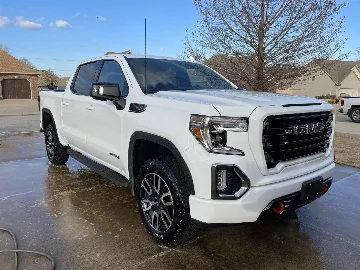
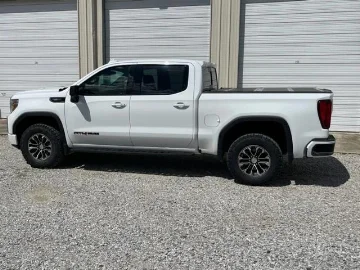
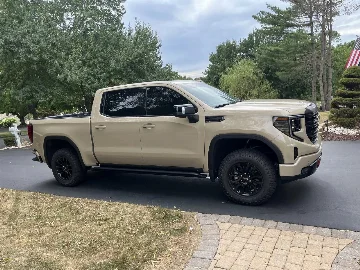
They’re finally looking into the 6.2

I called GM Roadside Assistance (GMRAP) and they directed me to coordinate the tow and gave me names/numbers of places to call. My situation was incredibly unsafe on many levels, so I just did what I was instructed. Now GMRAP is refusing to reimburse me until I give them more details than what the receipt I was provided gives them. So they want me to do what they advertise on their site as a service THEY were to provide.

To "help me out", I was given a loaner truck to use in the interim....after a week of fighting with them and finally threatening legal action as I have a disability (amputee) and need the cabin space to safely operate the pedals. THEN, magically, an hour later I received a call approving my rental of a Silverado with a 5.3l engine.

My interaction with GM thus far has been pitiful, embarrassing, and will not look favorable for them.
I'm really sorry to hear that. Unfortunately, I'm not surprised to read about any of issues with dealing with GM. It almost seems this is the norm when dealing with big companies anymore.
 

I'm really sorry to hear that. Unfortunately, I'm not surprised to read about any of issues with dealing with GM. It almost seems this is the norm when dealing with big companies anymore.
Yeah, it's absolutely awful. Shareholders > Consumers. Ironic how all of these "educated" people repeatedly fail to accept the reality that if you screw the only people that are voluntarily giving you their money and doing business with you, that they will soon make the decision to seek business elsewhere....somewhere where the definition of "valued customer" and "appreciate your business" carry with it some weight in actions vs. dismissive simple ear candy.

And I absolutely LOVE my GM's I've had. It's all I've owned with the only exclusion being a Chrysler minivan because let's face it, GM has never had an adult seat at the minivan table. No shade there, just facts. Literally every other vehicle I've purchased was a GM for over 30 years. And if this ends up as a lemon law buy back, it will be my SECOND such vehicle from GM that has needed that. Not sure how a customer is expected to stick with someone after such awful performance. Hopefully they make this right, and quick.
 

so is there any way to tell if you are affected other than it being a 19-24? or is it just if it's grenaded?
 

so is there any way to tell if you are affected other than it being a 19-24? or is it just if it's grenaded?
Unfortunately from everything I can tell, you know you're impacted when you're stuck on the side of the road with a seized engine. Mine gave no indication of eminent failure until the last 20-30 seconds or so when I started losing power. No check engine light. Got a message stating my engine oil was too hot and to idle the engine literally a few seconds before it quit at 50mph. Not confidence inspiring, to say the least.

I haven't seen anything posted anywhere that identifies certain VIN's that are impacted by over bored lifters, bad oil pumps, or bad main bearings, which I would think they would be able to identify?
 

Unfortunately from everything I can tell, you know you're impacted when you're stuck on the side of the road with a seized engine. Mine gave no indication of eminent failure until the last 20-30 seconds or so when I started losing power. No check engine light. Got a message stating my engine oil was too hot and to idle the engine literally a few seconds before it quit at 50mph. Not confidence inspiring, to say the least.

I haven't seen anything posted anywhere that identifies certain VIN's that are impacted by over bored lifters, bad oil pumps, or bad main bearings, which I would think they would be able to identify?
ugh, we just got a 2024 yukon, is got under 1k miles and I'm debating getting rid of it when the diesels come out
 

ugh, we just got a 2024 yukon, is got under 1k miles and I'm debating getting rid of it when the diesels come out
Unbiased observation here. The squeeky wheel gets the grease, right? The question that is not known right now is out of all the wheels that were made, how many are squeaking or will squeak. The known failures can be quantified via service records obviously. But until/unless they can identify the root cause of the failures (seems like multiple standalone issues), identify the impacted VIN's, and provide a reliable solution....then the number of "squeakers" are out there cannot be ascertained. Could be <1%. Could be 25%. Could be more. Nobody knows.
 

Unbiased observation here. The squeeky wheel gets the grease, right? The question that is not known right now is out of all the wheels that were made, how many are squeaking or will squeak. The known failures can be quantified via service records obviously. But until/unless they can identify the root cause of the failures (seems like multiple standalone issues), identify the impacted VIN's, and provide a reliable solution....then the number of "squeakers" are out there cannot be ascertained. Could be <1%. Could be 25%. Could be more. Nobody knows.
Just speculation, but I would think anyone that has had a catastrophic engine failure early in the trucks life would address the dealer. Is it possible the dealers and or GM aren't reporting these? So we really don't know if this is statistically significant.

Anybody have any info on whether it affects the 25' model year?
 

Just speculation, but I would think anyone that has had a catastrophic engine failure early in the trucks life would address the dealer. Is it possible the dealers and or GM aren't reporting these? So we really don't know if this is statistically significant.

Anybody have any info on whether it affects the 25' model year?
I would assume the 2025's have the same L87 engine code
 

Just speculation, but I would think anyone that has had a catastrophic engine failure early in the trucks life would address the dealer. Is it possible the dealers and or GM aren't reporting these? So we really don't know if this is statistically significant.

Anybody have any info on whether it affects the 25' model year?
I think it would be easily traceable, as they aren't fixing the engines but rather swapping out entire engines as well as some other assemblies (radiator, oil cooler, intake, etc.) due to metal going through the system from the failure. I would have to believe that a simple query showing complete engine order histories that are billed under warranty would point to the number of issues. However, further/deeper analysis would be needed to identify the "why" behind the failures.

I personally don't believe AFM/DFM is causing the engine failures in the 6.2l. Not saying they are perfect and can't cause issues (I don't know them well enough), but the AFM/DFM doesn't overbore the lifters. It doesn't cause oil pump shafts to shear. It doesn't cause main bearings to fail. In my humble opinion (and I'm an idiot here, so I could be dead wrong), the quality of craftmanship has breached a level of tolerance that maintains the integrity of the components. Perhaps due to cost saving measures, but perhaps due to a manufacturer upstream that took shortcuts. Or perhaps purely due to good intentions but the human element being behind every aspect of design, manufacturing, and assembly. Hopefully GM can identify the root cause(s) and identify remediation tactics that don't hit their bottom line too substantially.

Remember, no company simply absorbs these costs. They pass them along to the consumers in the products and services we pay for, so it's in our best interest as well if they don't have to replace a metric ton of these engines and can instead pinpoint the impacted VIN's.

 

I think it would be easily traceable, as they aren't fixing the engines but rather swapping out entire engines as well as some other assemblies (radiator, oil cooler, intake, etc.) due to metal going through the system from the failure. I would have to believe that a simple query showing complete engine order histories that are billed under warranty would point to the number of issues. However, further/deeper analysis would be needed to identify the "why" behind the failures.

I personally don't believe AFM/DFM is causing the engine failures in the 6.2l. Not saying they are perfect and can't cause issues (I don't know them well enough), but the AFM/DFM doesn't overbore the lifters. It doesn't cause oil pump shafts to shear. It doesn't cause main bearings to fail. In my humble opinion (and I'm an idiot here, so I could be dead wrong), the quality of craftmanship has breached a level of tolerance that maintains the integrity of the components. Perhaps due to cost saving measures, but perhaps due to a manufacturer upstream that took shortcuts. Or perhaps purely due to good intentions but the human element being behind every aspect of design, manufacturing, and assembly. Hopefully GM can identify the root cause(s) and identify remediation tactics that don't hit their bottom line too substantially.

Remember, no company simply absorbs these costs. They pass them along to the consumers in the products and services we pay for, so it's in our best interest as well if they don't have to replace a metric ton of these engines and can instead pinpoint the impacted VIN's.
Sounds good how do we, the customer, do that?
 

Sounds good how do we, the customer, do that?
I don't think we can, because we don't have access to those systems. However, I'm hopeful that the NHTSB's investigation which was announced on 1/17/2025 (not even a week ago) will generate some useful information. I'm hoping that there's just a glorified handful of us with issues as compared to a vast number of folks with good units. Here too, time will tell.
 

From a data perspective, it shouldn't actually be hard at all to identify/isolate root causes, as they'll be able to identify the VIN's class that had the majority of the oil pump failures, then back trace the source(s) for said pumps and trace batches and such from there. Again, this is assuming everyone in the supply chain is doing their jobs properly and according to rules/regulations/laws for just such a situation as this.
 

New Posts

Most reactions

Back
Top