Andystoy AT4
Active member
On my 22 (identical truck) silver vs sterling I used a sled deck (in the winter) and pulled a light tandem trailer in the summer. The stock suspension had a very nice ride but sagged a bit more than I liked with a sled on the deck. It pulled the light tandem fine because it had a low hitch weight.
I installed the Sumo blue (1000 lb) springs on the rear axle replacing the factory bump stops. I used the spacer to reduce the distance between the spring and the spacer and the axle bump stop. The sumo springs did what they were supposed to when the sag on the suspension was enough to engage the axle stop. What I didn't like was the slap that I felt in the cab when the sumo's contacted the axle stop whenever I crossed a break in the pavement. This was most evident in the winter with the sled deck on but not towing.
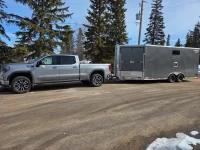
Next was a set of Bilstein 5100 for the front and rear. The rear shocks added stiffness to the ride but reduced the distance that the suspension moved loaded or unloaded. The front shocks were not as noticeable as far as stiffness and I got used to the stiffer ride. I bought a tandem cargo hauler (3500#) empty, 4200# with a sled and about 6600# with a Can Am Defender and with the trailer levelled the front end of the truck was up and I had excessive sag in the suspension to the point my headlights on low beam would get some flashes on the highway.
August, 2025 I bought the new AT4 and immediately noticed that I missed the smoother ride when not towing or heavily loaded. I had taken my Sumo springs and my rear Bilstein shocks off prior to the trade where they remain in my garage. The front Bilsteins went with the 2022.
After levelling the hitch on the truck and trailer because of the increased sag and the front rising a bit more the LED lights were a problem at night on the highway. I did more online research and decided on the airlift kit as my next project.
Install hints for the airlift kit:
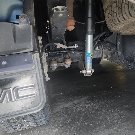
There are several good videos (etrailer) on line including the instructions that came with the airlift. I decided to do the install in the garage not on a lift. I raised the rear of the truck to extend the suspension to max and removed the spare tire protector and bump stops. I found that working laying on the ground was too much for my body so plan B was to remove the rear wheels, secure the frame etc and install the air bag with brackets (preassembled on the bench) while sitting outside the truck. The clamps and brackets fit as described and could be tightened from the outside as well. I measured and cut the airlines to fit, installed a piece of hose over the potential wear points on each airline, snapped them into the airbags as described and secured the airlines to brackets, frame etc. on either side.
Remove the license plate and bracket and check out the top or bottom holes for the preferred drill and install of the schrader ends. I chose the bottom two holes on the license plate and drilled each hole checking to make sure I didn't damage the electrical on the back side of the bumper. Reinstall the plate and run the ends through to the back secure with washers and supplied bolts. Air up both bags to 50 psi overnight to check for leaks, reinstall the spare tire protector, tire and rear wheels etc.
I chose to use a separate air line for each bag to provide more support to the outside when cornering. The air pressure in the bag increases with compression and reduces the sag to the outside. When items are loaded on the deck or a high load in the bed you can feel this lean more not noticeable when towing.
Results:
With the minimum 5 psi in each bag the hitch sits up about an 1" higher than stock with the same bed load. This results in the primary leaf spring having more room to travel down before it contacts the helper spring; resulting in a softer ride when unloaded.
When I put the hitch weight on the ball the 5 psi increased to 11 psi and reduced the sag about an 1" less than stock.
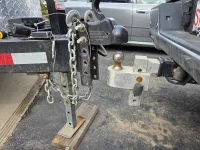
To bring the hitch height back to just less than no hitch load I had to increase both bags to 30 psi. After towing a round trip of about 300 miles(480km) I noticed the trailer was up in the front and not level as before so I raised the coupler to the top hole(2") and that once again lowered the front of the trailer to where it should be.
With the hitch weight removed the bag pressure dropped to 20 psi and raised the hitch about 1" above the 5 psi height
Conclusion:
I like the softer ride of the stock suspension even with the added air bags at 5 psi. when not towing.
The Sumo springs did reduce the sag on the 22 but had the slap when unloaded and no height adjustment.
Air ride 57388
The kit cost more than the Sumos, it was complete and easy enough to install for a DIY.
The air bags provide a progressive increase in resistance to sag and bottoming and can be adjusted to keep the truck level with various bed or hitch loads and eliminates the front nose rise that caused oncoming headlight flashing.
The airbags do not increase your payload or towing load but they reduce the amount of up and down travel compared to the Sumos.
I will not reinstall the Bilstein rear shocks until the Roadmasters are worn out.
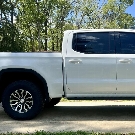
The standard box is a better choice for hauling or towing as the wheelbase increases by 9.6" without any significant downside other than parking in tight spaces.
I hope this write up will help someone decide on what they want to do to improve their towing stance and handling of a larger trailer.
I installed the Sumo blue (1000 lb) springs on the rear axle replacing the factory bump stops. I used the spacer to reduce the distance between the spring and the spacer and the axle bump stop. The sumo springs did what they were supposed to when the sag on the suspension was enough to engage the axle stop. What I didn't like was the slap that I felt in the cab when the sumo's contacted the axle stop whenever I crossed a break in the pavement. This was most evident in the winter with the sled deck on but not towing.
Next was a set of Bilstein 5100 for the front and rear. The rear shocks added stiffness to the ride but reduced the distance that the suspension moved loaded or unloaded. The front shocks were not as noticeable as far as stiffness and I got used to the stiffer ride. I bought a tandem cargo hauler (3500#) empty, 4200# with a sled and about 6600# with a Can Am Defender and with the trailer levelled the front end of the truck was up and I had excessive sag in the suspension to the point my headlights on low beam would get some flashes on the highway.
August, 2025 I bought the new AT4 and immediately noticed that I missed the smoother ride when not towing or heavily loaded. I had taken my Sumo springs and my rear Bilstein shocks off prior to the trade where they remain in my garage. The front Bilsteins went with the 2022.
After levelling the hitch on the truck and trailer because of the increased sag and the front rising a bit more the LED lights were a problem at night on the highway. I did more online research and decided on the airlift kit as my next project.
Install hints for the airlift kit:
There are several good videos (etrailer) on line including the instructions that came with the airlift. I decided to do the install in the garage not on a lift. I raised the rear of the truck to extend the suspension to max and removed the spare tire protector and bump stops. I found that working laying on the ground was too much for my body so plan B was to remove the rear wheels, secure the frame etc and install the air bag with brackets (preassembled on the bench) while sitting outside the truck. The clamps and brackets fit as described and could be tightened from the outside as well. I measured and cut the airlines to fit, installed a piece of hose over the potential wear points on each airline, snapped them into the airbags as described and secured the airlines to brackets, frame etc. on either side.
Remove the license plate and bracket and check out the top or bottom holes for the preferred drill and install of the schrader ends. I chose the bottom two holes on the license plate and drilled each hole checking to make sure I didn't damage the electrical on the back side of the bumper. Reinstall the plate and run the ends through to the back secure with washers and supplied bolts. Air up both bags to 50 psi overnight to check for leaks, reinstall the spare tire protector, tire and rear wheels etc.
I chose to use a separate air line for each bag to provide more support to the outside when cornering. The air pressure in the bag increases with compression and reduces the sag to the outside. When items are loaded on the deck or a high load in the bed you can feel this lean more not noticeable when towing.
Results:
With the minimum 5 psi in each bag the hitch sits up about an 1" higher than stock with the same bed load. This results in the primary leaf spring having more room to travel down before it contacts the helper spring; resulting in a softer ride when unloaded.
When I put the hitch weight on the ball the 5 psi increased to 11 psi and reduced the sag about an 1" less than stock.
To bring the hitch height back to just less than no hitch load I had to increase both bags to 30 psi. After towing a round trip of about 300 miles(480km) I noticed the trailer was up in the front and not level as before so I raised the coupler to the top hole(2") and that once again lowered the front of the trailer to where it should be.
With the hitch weight removed the bag pressure dropped to 20 psi and raised the hitch about 1" above the 5 psi height
Conclusion:
I like the softer ride of the stock suspension even with the added air bags at 5 psi. when not towing.
The Sumo springs did reduce the sag on the 22 but had the slap when unloaded and no height adjustment.
Air ride 57388
The kit cost more than the Sumos, it was complete and easy enough to install for a DIY.
The air bags provide a progressive increase in resistance to sag and bottoming and can be adjusted to keep the truck level with various bed or hitch loads and eliminates the front nose rise that caused oncoming headlight flashing.
The airbags do not increase your payload or towing load but they reduce the amount of up and down travel compared to the Sumos.
I will not reinstall the Bilstein rear shocks until the Roadmasters are worn out.
The standard box is a better choice for hauling or towing as the wheelbase increases by 9.6" without any significant downside other than parking in tight spaces.
I hope this write up will help someone decide on what they want to do to improve their towing stance and handling of a larger trailer.